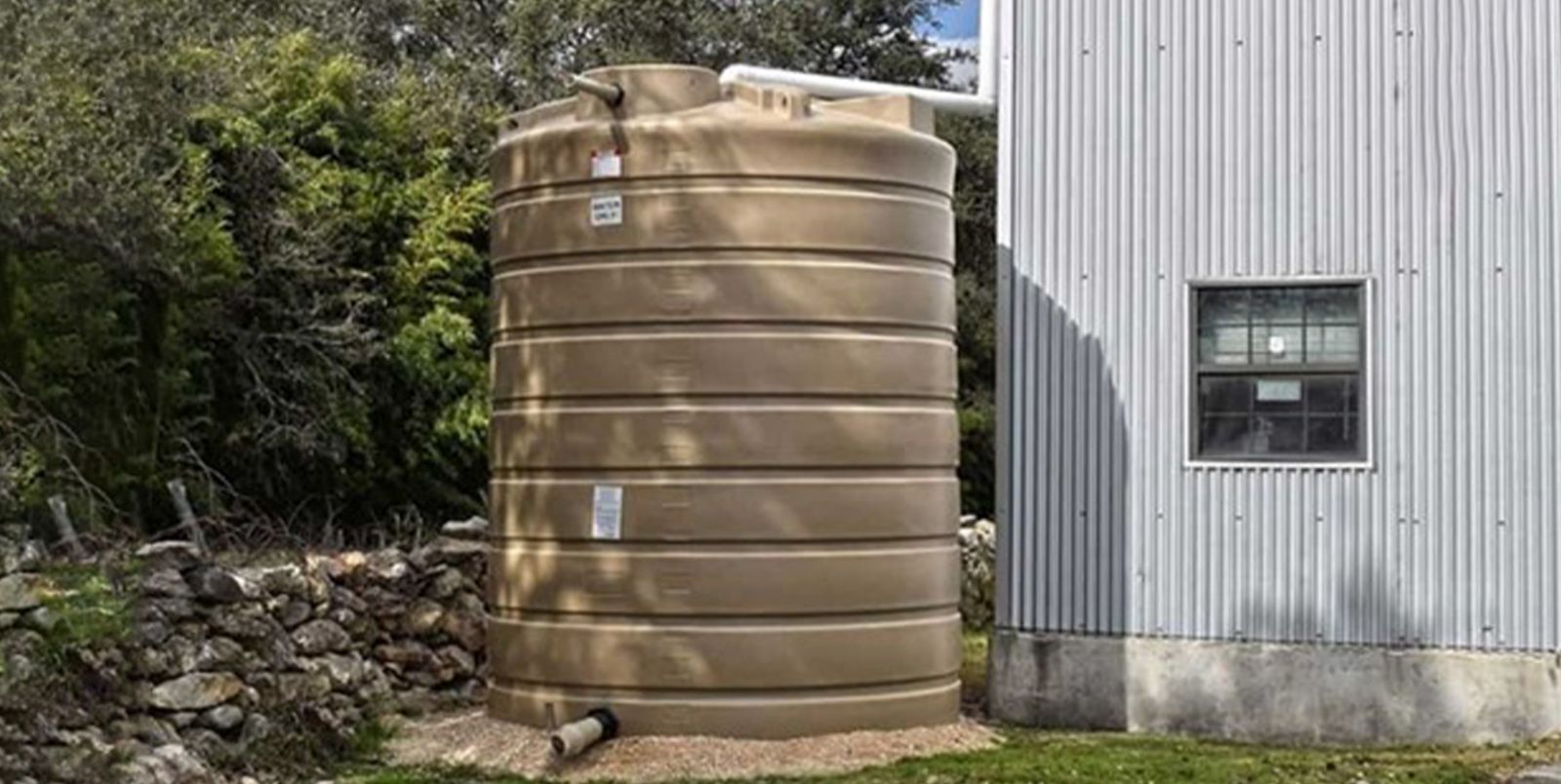
Emergency water reserve
If your pump ever fails, the stored water keeps you supplied while repairs are made, real peace of mind out in the country.
When your well produces water more slowly than your home or irrigation needs it, a storage tank bridges the gap, filling steadily around the clock so you always have a reserve to draw from.
You need a storage tank when your water usage rate is higher than your well's production rate. Here's a common Hill Country example: your well produces 5 gallons per minute, but your largest sprinkler zone needs 17. The well simply can't run that zone on its own.
A storage tank solves it. Your well fills the tank gradually, day and night, building a large reserve. Then, during peak use, you draw from that supply at a much higher rate than the well alone could ever deliver.
Water from your well enters the tank at a slow, steady fill rate the well can comfortably sustain.
Around the clock, the tank quietly builds up a large reserve of stored water.
When you turn on the tap or the sprinklers, you draw from that reserve at whatever rate your property demands.
If your pump ever fails, the stored water keeps you supplied while repairs are made, real peace of mind out in the country.
A spray bar in the tank reduces iron content and lets sulfur escape, meaning no more rotten-egg smell or rusty iron stains.
A tank minimizes unnecessary pump cycling, reducing wear and extending the lifespan of your whole well system.
We install storage tanks to match your performance needs and your property's look, including concrete and metal tanks you can finish in stone, brick, or wood to blend right into a Hill Country home.
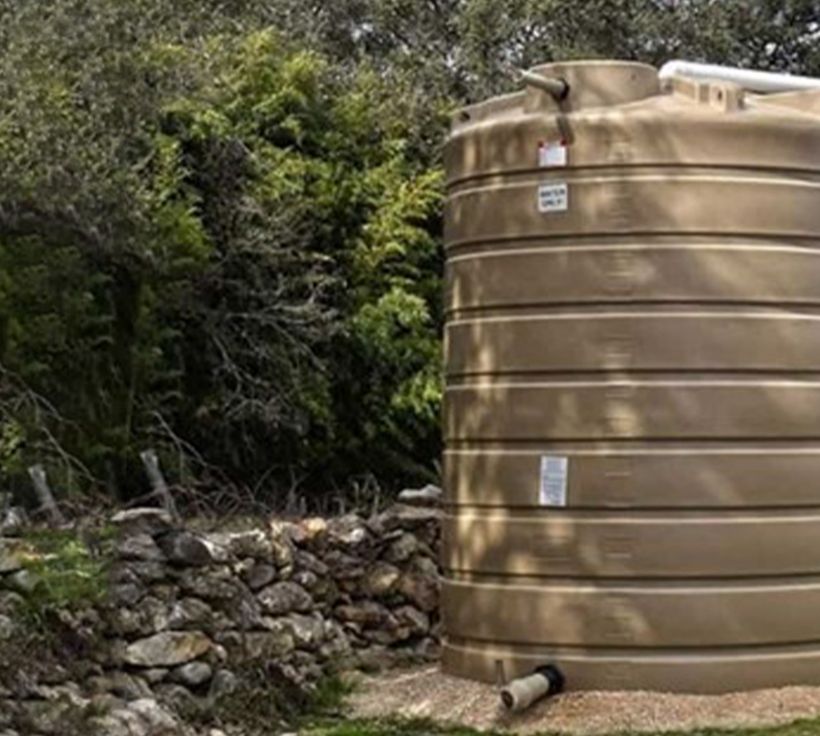
Versatile polyethylene tanks in multiple colors and a wide range of footprints for compact or larger sites. 550-5,050 gallons (5'-10' diameter).
Strong, long-lasting tanks finished to match your property, Slick, Ringed, or Rock-Stamped, and fully masonry-compatible for stone or brick. 1,600-4,800 gallons (2-6 rings, 8'2" diameter).
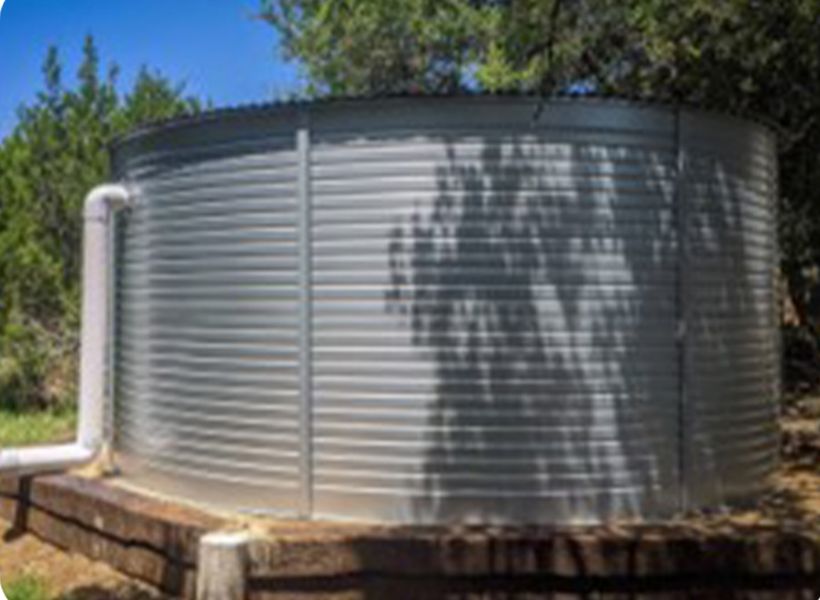
Premium tanks with an antimicrobial Aqualiner Fresh lining that keeps stored water fresher and adds no taste or odor. 4,990 & 9,907 gallons, many color options.
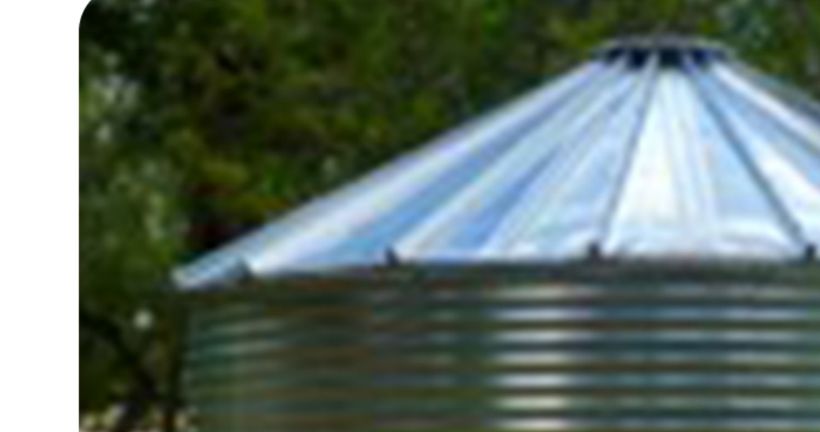
Multiple roof styles, from the economical Dome to a 30° profile rated for 165 MPH winds, plus wood & stone cladding. 1,535-6,139 gallons, 20-year DuraCoat finish warranty.
Tank sizes and finishes shown are from current manufacturer options; we'll help you choose the right capacity for your well's output and your household demand.
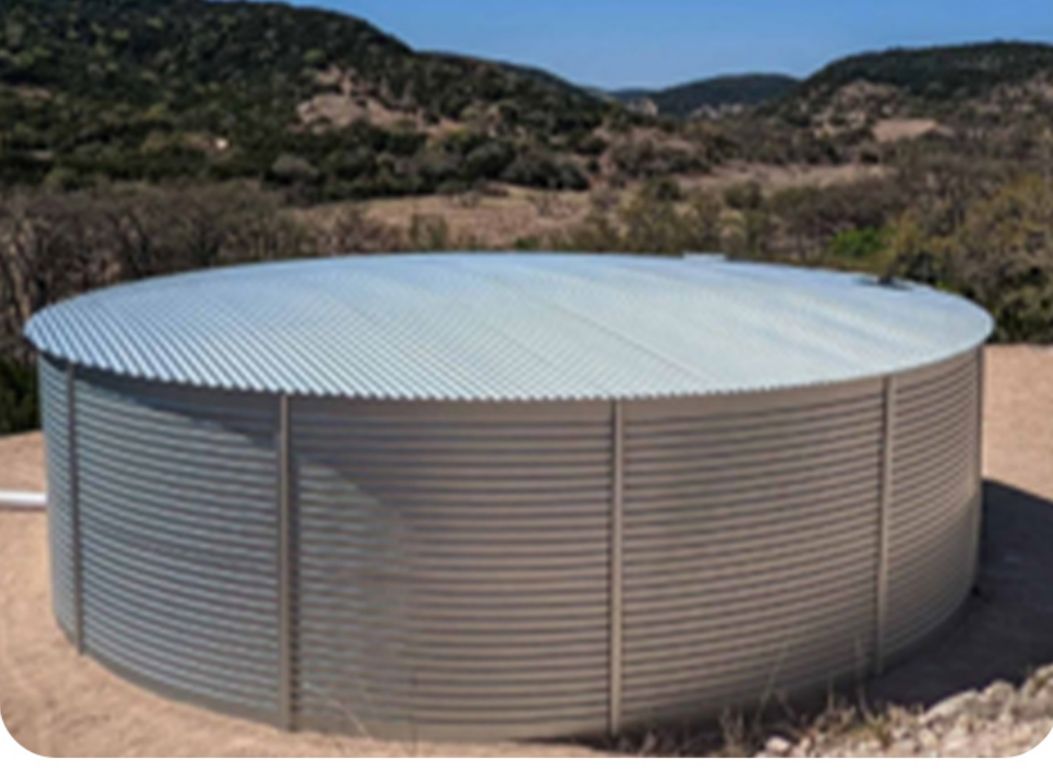
Out here, many wells produce water more slowly than a busy household or irrigation system demands, especially in the heat of summer. A storage tank lets your well's steady output add up to a reserve large enough for sprinklers, livestock, and daily living.
And because appearance matters on a Hill Country property, our concrete and metal tanks can be finished in stone, brick, or wood cladding to blend right in, not stick out.
The most common warning sign is running out of water during normal use, like the well sputtering or losing pressure when you run sprinklers, do laundry, and shower close together. Many Hill Country wells drilled into limestone and the Trinity Aquifer produce water slowly (sometimes just a few gallons per minute), so they cannot keep up with peak household demand even when the well itself is healthy. A storage tank lets your well fill the tank steadily over the course of the day, then delivers that stored water on demand when you need it. If you are seeing air in your lines or your pump is cycling on and off constantly, give us a call at (830) 816-3232 and we can help you figure out whether storage is the right fix.
Your well pump fills a large storage tank at whatever rate the well can produce, even if that is only a gallon or two per minute. A separate booster pump and pressure tank then pull water from that storage tank to deliver strong, steady pressure to your house on demand. This setup lets a slow well comfortably support a family because the tank acts as a reservoir, building up reserves during low-use hours and giving you a buffer for peak times like mornings and evenings.
It depends on your daily water use, your well's production rate, and how much reserve you want for dry spells or peak demand. A common rule of thumb is to size for at least one to two days of household use, and many Hill Country homes land on tanks in the range of a few hundred to several thousand gallons. We will look at your well's measured output, your household size, and whether you irrigate or keep livestock, then recommend a size that gives you peace of mind without paying for more than you need. Call us at (830) 816-3232 and we can walk through the numbers with you.
In most cases, yes. Adding a storage and booster pump system to a well that already produces water (just slowly) is usually a more affordable way to solve a demand problem than drilling a new or deeper well. Drilling deeper or drilling a new well does not always increase production in Hill Country limestone, so storage is often the smarter and more reliable investment. We will give you an honest assessment of which path makes sense for your property before you spend a dollar.
A typical storage and booster pump installation can often be completed in a day or two once the tank and equipment are on site, though the timeline depends on tank size, site access, and any electrical or plumbing work needed. Permitting in the Hill Country varies by county and by which groundwater conservation district you fall under, so requirements differ between Kendall, Bexar, Comal, and surrounding areas. As a local company serving the area since 1985, we know the regional rules and will handle the details and tell you exactly what your specific location requires. Reach us at (830) 816-3232 to get started.
Pumps and pressure systems matched to your storage setup.
Learn moreKeep your pump, tank, and well working together.
Learn moreRestore output on a slow or low-yield well.
Learn moreTell us your well's output and how you use water, and we'll recommend the right storage solution for your property.